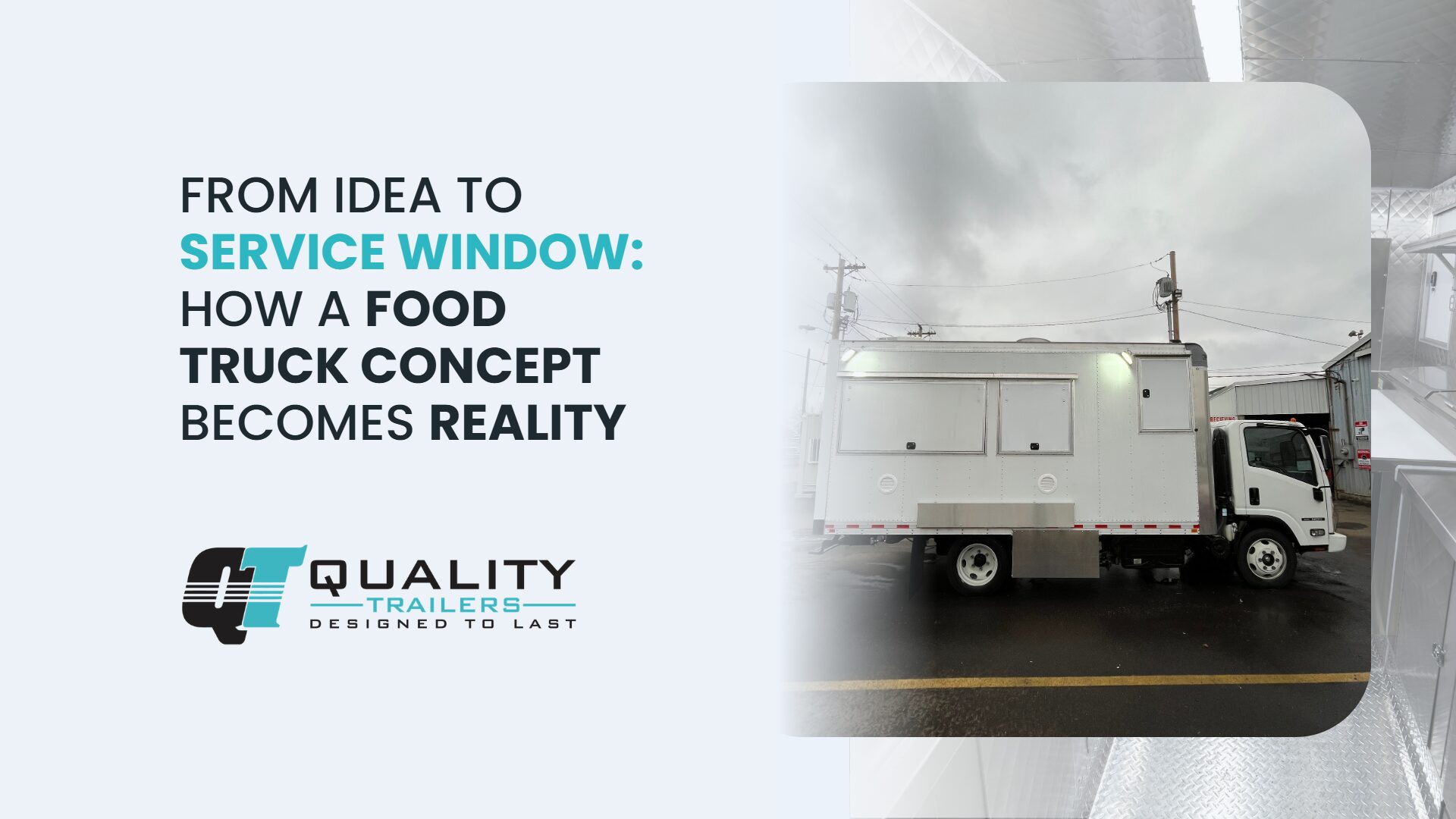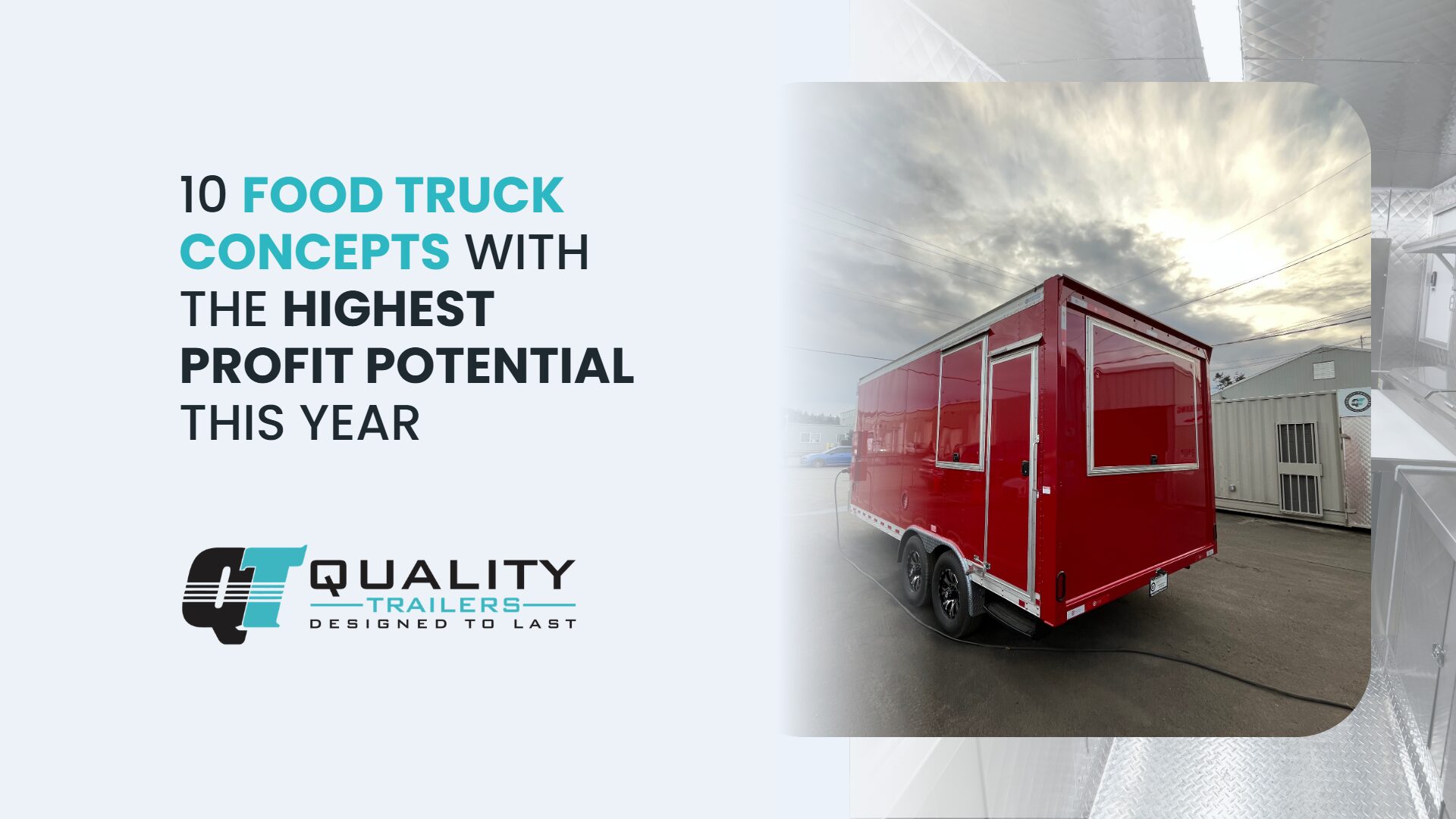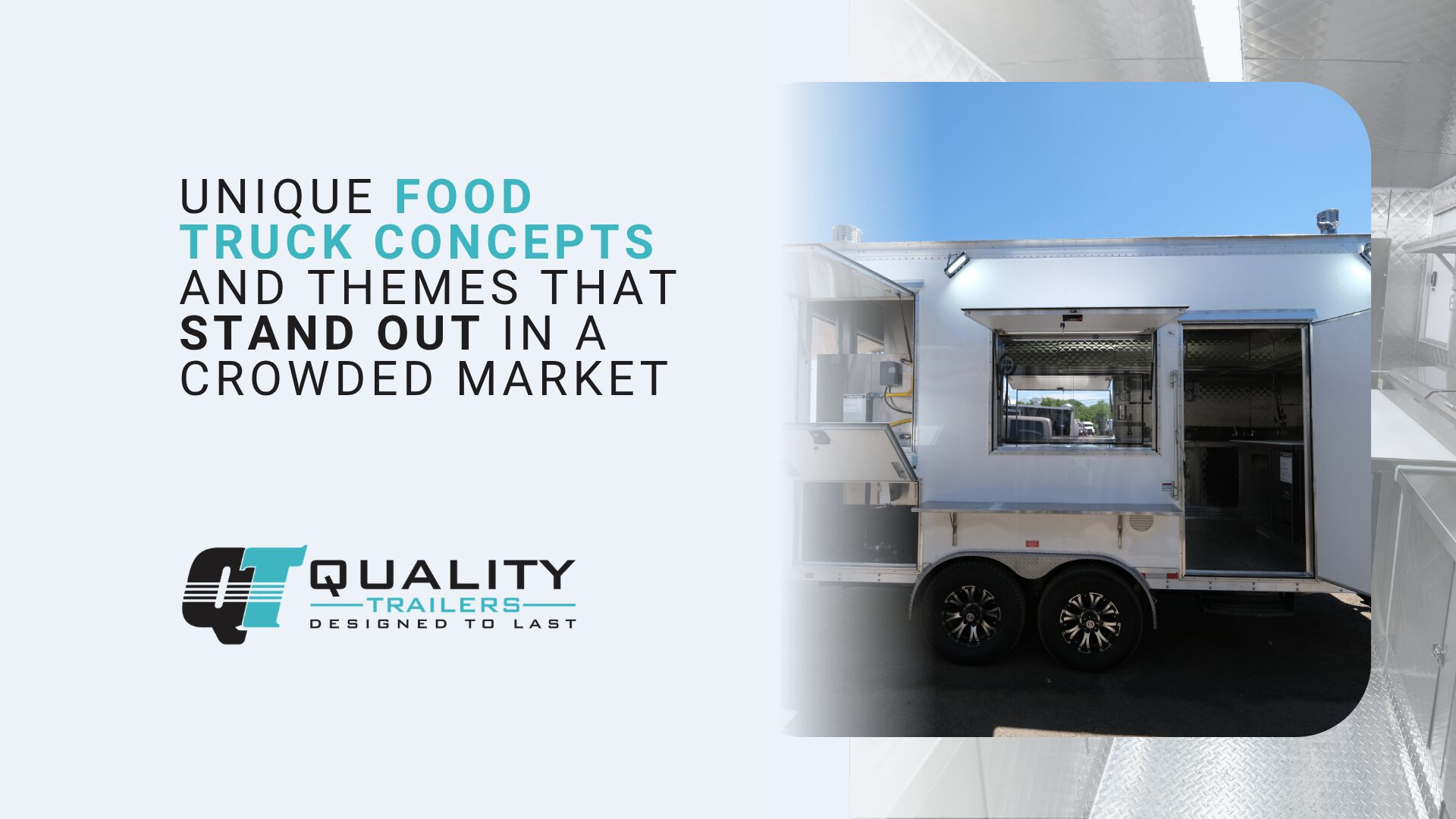
Every food trailer that serves customers started as an idea. The distance between that idea and the first ticket handed out the service window is longer and more complex than most first-time operators expect, and shorter and more manageable than many of them fear. Understanding what actually happens between the initial concept and opening day gives operators the ability to make better decisions at every stage.
Stage 1: The Concept
Every build starts with a concept, and the quality of that concept determines the quality of every decision that follows. A well-defined concept answers four questions: What food will I sell? Who is my customer? Where will I operate? What do I want the customer experience to feel like?
The food answer should be specific. Not tacos in general, but birria tacos specifically, cooked in a specific style. Not pizza in general, but wood-fired Neapolitan pizza using a specific oven and specific dough technique. Specificity drives every equipment and layout decision downstream.
Stage 2: The Menu and Equipment List
Once the concept is clear, the menu should be finalized before any other decision is made. Work through every menu item and list the equipment required to produce it at peak volume. Include cooking equipment, the cold storage it requires, the prep surface needed, and the ventilation it demands. The resulting list becomes the equipment specification that drives the floor plan.
Stage 3: Choosing a Builder
The builder selection decision is among the most consequential in the entire process. A builder who starts with a full CAD floor plan reviewed and approved by the customer before fabrication begins is operating very differently from one who works from templates or begins cutting metal without design approval. The custom food trailer builder page explains what a design-first build process looks like in practice.
Key questions to ask any builder before signing: Do you produce a full CAD floor plan before fabrication? Have you built trailers to my state’s compliance standards? Can you support health department pre-approval? What does your payment structure and timeline look like?
Stage 4: The Design and Approval Phase
At Quality Food Trailers, the design phase begins with the customer’s concept description, menu, and equipment list. An in-house designer produces a complete floor plan typically within one to two weeks. The customer reviews that plan and requests any revisions before the designer moves to producing the full technical plan set.
This full plan set is what gets submitted to the local health department for pre-approval. Addressing inspector feedback at the design stage, before fabrication begins, is far less expensive than making structural changes to a finished trailer.
Stage 5: The Build
A standard food trailer build takes two to three months from the date of the down payment. A dedicated project manager tracks each build stage and communicates progress throughout. The payment structure is 50 percent down to start, 40 percent at mid-build, and the remaining balance upon completion. For operators who need financing support, food trailer financing guide covers the options available including programs for first-time buyers.
Stage 6: Compliance and Inspection
Quality Food Trailers builds to California state code and Washington L&I standards, completing the relevant inspections at the manufacturing facility before the trailer leaves Portland. Operators in these states arrive at their local health department with a pre-inspected unit and a complete plan set.
For operators in Oregon, the state classifies mobile food units into four categories with different capability and equipment requirements. The Oregon custom food trailer permitting guide covers what each category means and what the permitting process involves.
Stage 7: Pre-Delivery Preparation
The period between signing the contract and taking delivery is not a waiting period. It is the time to complete the operational setup that makes the trailer revenue-generating from its first day of operation. This includes finalizing commissary kitchen agreements, completing health department permit applications, securing first locations or event bookings, and establishing supplier relationships.
Stage 8: First Service
The first service is almost always a learning experience regardless of how well the build was planned. Building a first service without revenue pressure, such as a friends-and-family soft launch or a low-stakes local market, creates the opportunity to identify and address adjustments before the stakes are higher. From that point, the compounding logic of a well-built, well-designed trailer becomes apparent every service day.
Quality Food Trailers: From Concept to Service Window
Quality Food Trailers is a family-owned manufacturer based in Portland, Oregon with over 25 years of experience and more than 950 completed builds across every type of culinary concept. Every build starts with a free consultation and custom quote. The in-house design team produces a complete CAD floor plan typically within one to two weeks, and a dedicated project manager tracks every stage through to delivery.
Explore custom food trailer pricing or visit qualityfoodtrailers.com to start the conversation about your concept.
Frequently Asked Questions
How long does the full process take from concept to first service?
From initial concept to first service typically takes four to six months. The design phase takes two to three weeks. The build takes two to three months for standard configurations. Health department permitting and operational setup run in parallel and should be completed before delivery.
What is the single biggest mistake first-time food truck operators make?
Starting the equipment selection or builder search before finalizing the menu and concept. This backward sequence produces trailers that do not quite fit the menu, kitchens that fight the workflow instead of supporting it, and layouts that limit throughput from the first service day.
Do I need health department approval before my trailer is built?
Final approval is not required before construction begins, but the pre-approval process should start during the design phase. The full plan set produced by your manufacturer is submitted to your local health department for review. Addressing feedback at this stage is far less expensive than making physical changes after fabrication is complete.
Can I choose my own equipment and have it installed during the build?
Yes, most reputable builders will install customer-supplied equipment. Installation typically covers gas line connections, testing, wall venting, and securing the unit in place. Equipment that goes under a ventilation hood may require additional components such as a shunt-trip breaker.
What should I do while my trailer is being built?
Use the build period to complete the operational setup that makes your trailer revenue-generating from day one. This includes commissary kitchen agreements, health department permit applications, location bookings, supplier relationships, and staff hiring.